
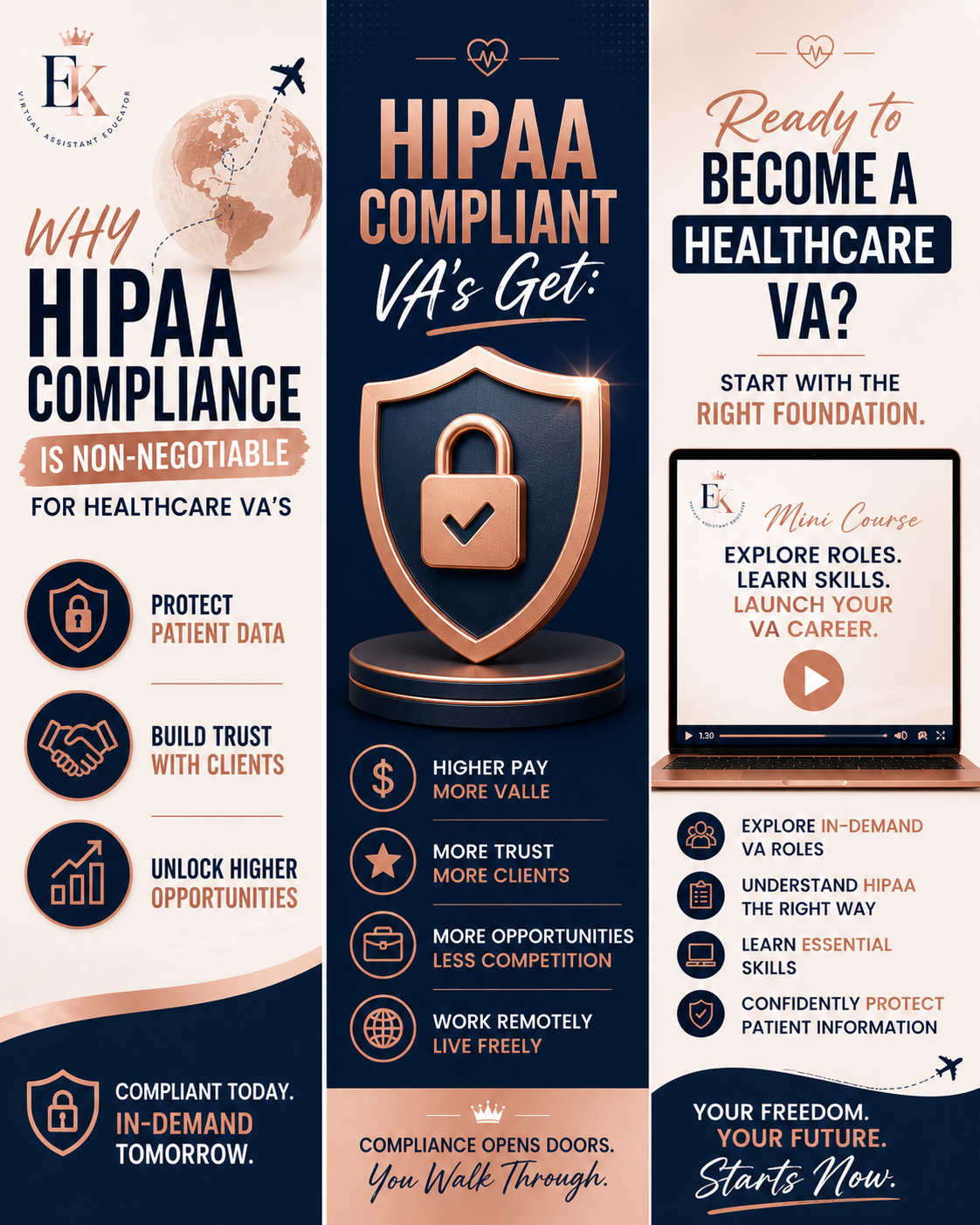
Healthcare Virtual Assistant Academy – HIPAA Compliance
If you’re considering a career as a healthcare virtual assistant—or you’re already working in the field—understanding HIPAA compliance isn’t optional. It’s foundational. In fact, it’s one of the most critical skills you can develop if you want to work with medical practices, clinics, or healthcare organizations in a professional, trustworthy capacity.
This guide breaks down why HIPAA compliance is necessary, how it affects your day-to-day responsibilities, and why mastering it can dramatically increase your value in the healthcare industry.

What Is HIPAA Compliance?
HIPAA stands for the Health Insurance Portability and Accountability Act, a U.S. law designed to protect sensitive patient health information (PHI) from being disclosed without the patient’s consent or knowledge.
For healthcare virtual assistants, HIPAA compliance means:
- Safeguarding patient data
- Using secure communication tools
- Following strict privacy protocols
- Understanding legal and ethical responsibilities
In simple terms: if you handle patient information in any way, HIPAA applies to you.
Why HIPAA Compliance Matters for Healthcare Virtual Assistants
1. You’re Handling Sensitive Patient Information
As a healthcare virtual assistant, your tasks may include:
- Scheduling appointments
- Managing medical records
- Communicating with patients
- Processing insurance information
All of these involve protected health information (PHI). Without proper HIPAA compliance, even a small mistake—like sending an email to the wrong person—can lead to serious legal consequences.
2. Healthcare Providers Require It (No Exceptions)
Doctors, clinics, and healthcare businesses cannot legally work with anyone who is not HIPAA compliant.
This means:
- No HIPAA knowledge = limited job opportunities
- HIPAA training = immediate credibility boost
If you want to work in this niche, compliance isn’t a bonus skill—it’s a requirement.
3. It Protects You Legally and Professionally
HIPAA violations can result in:
- Fines and penalties
- Termination of contracts
- Loss of professional reputation
When you understand and follow HIPAA regulations, you protect not only the patient—but also your own career.
4. It Builds Trust With Clients and Employers
Healthcare providers are extremely cautious about who they trust with patient data.
When you demonstrate HIPAA compliance:
- You position yourself as a professional
- You stand out from general virtual assistants
- You become a lower-risk hire
Trust is everything in healthcare—and HIPAA compliance is how you earn it.
5. It Opens the Door to Higher-Paying Opportunities
Healthcare virtual assistants who are HIPAA trained can often command higher rates because:
- They require less oversight
- They reduce liability for the provider
- They bring specialized knowledge
This is one of the fastest ways to move from general VA work into a premium niche.

Common HIPAA Mistakes Virtual Assistants Make
If you’re new to the field, here are some common pitfalls to avoid:
- Using non-secure email platforms
- Storing patient data on personal devices
- Sharing login credentials
- Discussing patient information in unsecured environments
- Failing to sign a Business Associate Agreement (BAA)
Avoiding these mistakes starts with proper training and awareness.
How HIPAA Compliance Shapes Your Role
Healthcare virtual assistants aren’t just admin support—they are an extension of the provider’s operations.
Depending on your role, you might specialize in:
- Medical billing and coding
- Patient coordination
- Insurance verification
- Electronic health records (EHR) management
- Appointment scheduling and intake
Each of these roles requires a clear understanding of HIPAA guidelines to be performed correctly and safely.
Watch: Mini Course on Healthcare Virtual Assistant Roles
In this mini course, you’ll learn:
- The different roles available in the healthcare virtual assistant field
- What each role requires
- How HIPAA compliance applies to each position
- Which path might be the best fit for you
Why Learning HIPAA Compliance Now Gives You an Edge
The demand for healthcare virtual assistants is growing rapidly as more providers move to remote and hybrid operations.
However, not everyone entering this space is properly trained.
By learning HIPAA compliance early, you:
- Skip beginner mistakes
- Become job-ready faster
- Position yourself as a specialist—not a generalist
Ready to Become a HIPAA-Compliant Healthcare Virtual Assistant?
If you’re serious about building a career in this field, you need more than just interest—you need structured training.
Inside the full course, you’ll learn:
- HIPAA compliance fundamentals (step-by-step)
- Real-world workflows used by healthcare providers
- The exact roles you can apply for
- How to confidently work with patient data
- How to position yourself for high-quality clients

Consider The Next Step
HIPAA compliance isn’t just a legal requirement—it’s the backbone of a successful healthcare virtual assistant career.
It protects patients.
It protects providers.
And it protects you.
If you want to stand out, get hired, and grow in this space, mastering HIPAA is one of the smartest moves you can make.
Take the Next Step
Enroll in the full course today and start building a compliant, confident, and in-demand career as a healthcare virtual assistant.
Helpful Resources:
•Free Remote Ready Checklist
•Join My Newsletter : Healthcare Virtual Assistant Academy
Leave a Reply